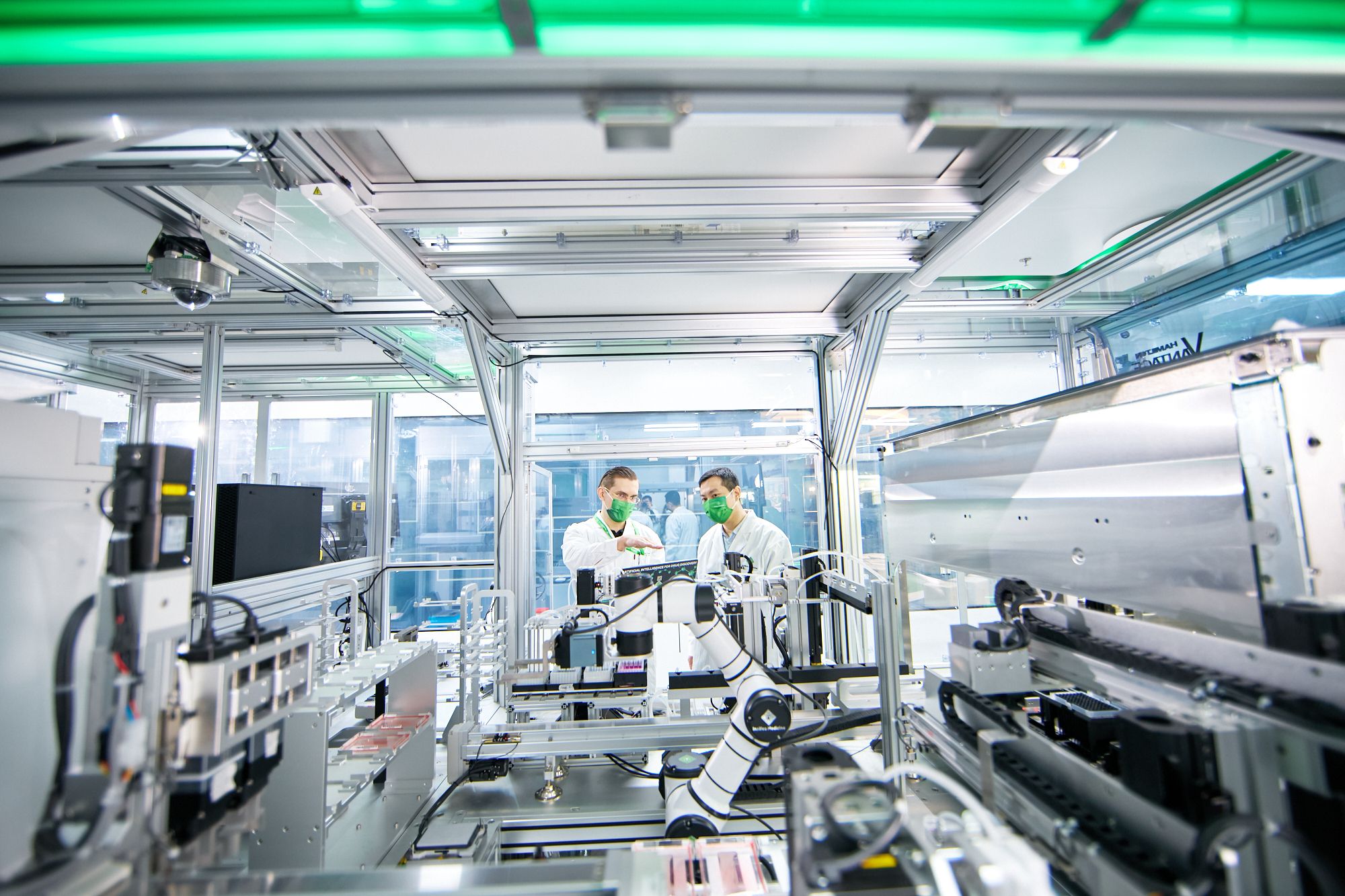
Drug discovery has long been a slow, costly, and high‑stakes endeavor, often requiring more than ten years and enormous financial investment before a single therapy reaches the market. Breakthroughs in artificial intelligence and protein folding tools are now transforming this process by greatly enhancing how researchers interpret biological targets, craft potential drug molecules, and anticipate their effects. As these innovations advance, development timelines are shrinking, expenses are decreasing, and therapeutic possibilities once considered unattainable are becoming viable.
The Central Role of Protein Structure in Drug Discovery
Most drugs work by binding to proteins and altering their activity. To design effective molecules, researchers need to understand a protein’s three-dimensional structure, including the shape of its binding pockets and how it changes over time.
For decades, uncovering protein structures has depended on experimental approaches like X-ray crystallography, nuclear magnetic resonance, and cryo-electron microscopy. Although highly effective, these techniques often demand months or even years for a single protein and cannot be applied universally. Numerous medically important proteins, such as membrane proteins and intrinsically disordered proteins, have therefore remained difficult to characterize structurally.
AI-driven protein folding tools have transformed this bottleneck into an opportunity.
Recent Advances Driven by AI in Protein Structure Prediction
The advent of deep learning systems that can forecast protein structures with accuracy approaching experimental results signaled a major breakthrough, as models like AlphaFold and RoseTTAFold proved that AI is capable of deriving a protein’s three-dimensional form straight from its amino acid sequence.
Principal effects encompass:
- Prediction of structures for millions of proteins, including human, viral, and bacterial targets.
- Rapid generation of structural hypotheses in days rather than years.
- Coverage of previously undruggable or poorly characterized proteins.
Public databases built on these tools now contain hundreds of millions of predicted structures, giving drug discovery teams immediate access to structural insights at the earliest stages of research.
Advancing the Pace of Target Discovery and Verification
AI-driven protein folding enhances the initial stage of drug discovery by helping pinpoint and confirm the most suitable biological targets.
By revealing active sites, allosteric pockets, and protein–protein interaction interfaces, folding models help researchers:
- Assess whether a protein is likely to be druggable.
- Understand disease-causing mutations and their structural consequences.
- Prioritize targets with clear mechanistic links to disease.
For example, during the COVID-19 pandemic, rapid structural predictions of viral proteins supported global efforts to analyze druggable sites and repurpose existing compounds, accelerating preclinical research under intense time pressure.
AI-Enhanced Virtual Screening and Molecular Docking
Once the target structure is identified, researchers need to determine which molecules can bind to it effectively, and this stage is strengthened by AI, which blends protein‑folding results with sophisticated virtual screening and docking methods.
Modern AI-driven screening platforms can:
- Assess millions to billions of compounds through in silico analysis.
- Estimate binding affinity and selectivity with progressively refined precision.
- Eliminate candidates with weak drug-like characteristics at an early stage.
This approach reduces the need for costly wet-lab screening campaigns and focuses experimental resources on the most promising candidates. In some programs, AI-based screening has cut early discovery timelines from years to months.
Generative AI in Structure-Guided Drug Development
Beyond screening existing molecules, generative AI models are now designing entirely new compounds tailored to specific protein structures. Using the structural information from folding tools, these models propose molecules that fit precisely into binding sites while optimizing properties such as potency, solubility, and safety.
Applications include:
- Development of highly selective kinase inhibitors engineered to minimize unintended interactions.
- Identification of new antibiotic frameworks capable of targeting resistant bacterial strains.
- Refinement of lead molecules by applying accelerated cycles of design and evaluation.
In several reported cases, AI-designed molecules have advanced from concept to preclinical candidates in under two years, a pace rarely seen in traditional discovery pipelines.
Insights into Protein Behavior and Their Complex Assemblies
Proteins are not fixed structures; their forms shift and they engage with a variety of molecules. AI models are now widely employed to anticipate protein–protein assemblies, structural rearrangements, and their dynamic behavior.
This feature makes it possible to:
- Addressing protein–protein interactions that were long viewed as beyond the reach of conventional drug design.
- Enhanced anticipation of resistance pathways emerging from structural alterations.
- More refined engineering of biologics, including antibodies and peptide-based modalities.
By integrating folding predictions with molecular simulations, researchers gain a more realistic view of how drugs behave in living systems.
Lowering Expenses and Mitigating Risk Throughout the Pipeline
The combined use of AI and protein folding tools reduces failure rates by improving decision-making at every stage. Earlier elimination of weak targets and suboptimal compounds leads to fewer late-stage failures, which are the most expensive and damaging.
According to industry evaluations, even a slight decrease in late-stage attrition can generate billions in yearly savings, and as AI models advance further, those benefits are expected to increase, making drug development both more efficient and more widely accessible.
Obstacles and Thoughtful Implementation
Although highly capable, AI and protein‑folding tools still fall short of perfection, as their predicted structures can overlook uncommon conformations, shifts triggered by ligands, or the impact of cellular conditions; therefore, experimental confirmation remains vital, and depending too heavily on computational forecasts may introduce significant risks.
Other challenges include:
- Data bias in training sets.
- Limited interpretability of complex models.
- Integration with regulatory and quality standards.
Addressing these issues requires close collaboration between computational scientists, experimental biologists, and clinicians.
A Groundbreaking Change in the Way New Medicines Are Identified
AI and protein folding tools are not simply accelerating existing workflows; they are redefining what is possible in drug discovery. By turning biological sequences into actionable structural knowledge and pairing that insight with intelligent design systems, researchers are moving from trial-and-error experimentation toward rational, data-driven innovation. The result is a discovery process that is faster, more precise, and increasingly capable of addressing diseases that have long resisted traditional approaches.