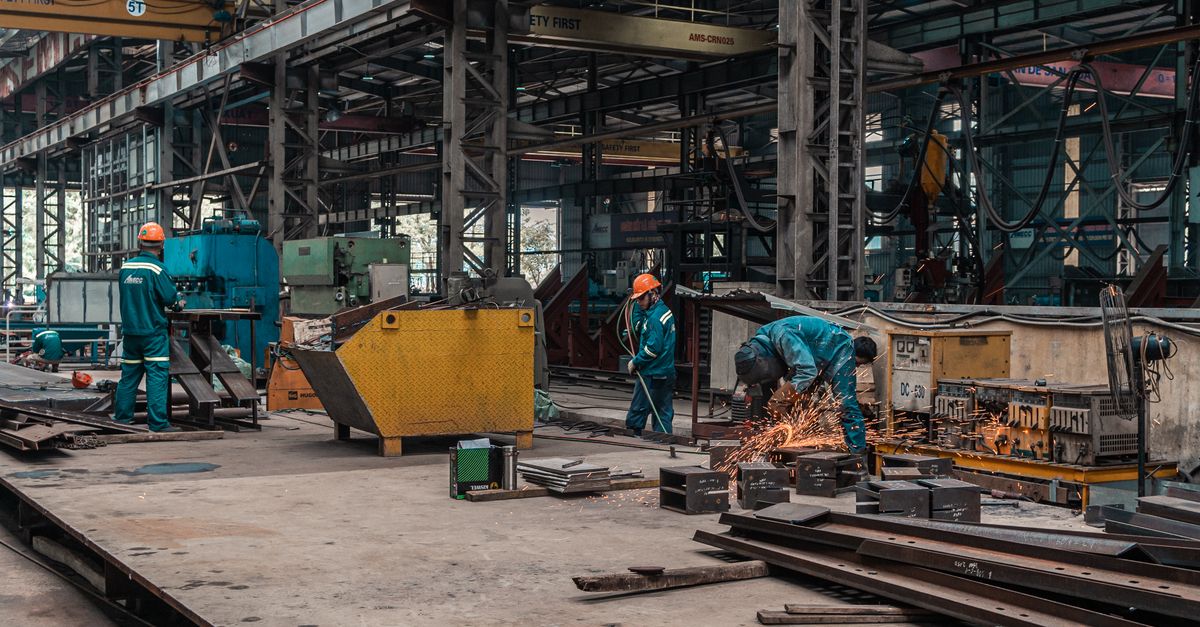
Manufacturing investors judge energy expenses and the depth of the labor pool as two of the most influential factors defining site choices, operational scale, capital intensity, and long-term competitiveness. Poland offers a substantial industrial foundation, a strategic position in Central Europe, and an evolving energy portfolio. That evolving mix, along with the supply of qualified workers, shapes operating margins, directs capital toward efficiency upgrades or on-site generation, and influences how quickly a facility can be staffed and expanded.
The energy landscape and the key aspects investors assess
Energy sources and transition trajectory: Poland historically relied heavily on coal-fired generation but is rapidly diversifying. Important structural elements for investors include the growing share of renewables (onshore and planned offshore wind), gas-fired capacity enabled by an operational LNG terminal on the Baltic coast, corporate procurement options, and planned nuclear capacity intended to provide long-term baseload. These dynamics affect price volatility, reliability, and regulatory risk.
Price structure and components: Industrial energy bills consist of commodity energy, network charges, balancing and capacity fees, taxes, and carbon costs under the EU Emissions Trading System (ETS). Investors break down total delivered cost per kWh and examine peak-demand charges and time-of-use differentials because manufacturing often has high load factors and exposure to evening and overnight tariffs.
Volatility and scenario risk: Investors outline a range of potential electricity and gas price trajectories, incorporating shifts in EU carbon pricing, abrupt movements in fuel markets, and domestic measures such as renewable auctions and capacity schemes. Sensitivity assessments illustrate how margins and payback periods evolve across differing price scenarios, and energy‑intensive developments typically rely on hedging strategies or long‑term off‑take contracts to secure financing.
Grid capacity and reliability: Developers evaluate whether the local grid can support significant new power demands, assess the presence of industrial substations, review permitting schedules for necessary upgrades, and consider how often outages occur. Areas with limited electrical infrastructure may face lengthy delays and substantial additional upgrade expenses.
Options for supply-side management: Investors assess corporate power purchase agreements (PPAs), on-site generation such as cogeneration and diesel or gas peaker units, energy storage solutions, and behind-the-meter renewable systems. Larger facilities often adopt blended approaches, pairing PPA-supported renewable procurement with on-site backup resources to curb price risks and uphold sustainability goals.
Regulatory and fiscal frameworks: Attention is drawn to auctions and renewable subsidies, industrial tariff structures, carbon‑leakage safeguards such as free ETS allowances, and possible upcoming levies. Special Economic Zones (SEZs), regional incentive schemes, and local tax provisions can all shape actual energy cost profiles.
Workforce availability: what investors measure
Labor supply and demographics: Investors map regional labor pools, unemployment rates, migration trends and age structure. Poland’s working-age population has been affected by emigration and demographic aging, pushing investors to consider automation intensity and flexible staffing strategies in lower-density regions.
Skill mix and technical education: Manufacturing operations require a mix of blue-collar trades (welders, electricians), technicians for automated lines, and white-collar roles (engineers, quality managers). Investors assess the output of technical schools and universities, prevalence of apprenticeship programs, and retraining capacity—especially for new technologies such as Industry 4.0 systems.
Wage levels and productivity: Poland’s labor expenses remain below those in Western Europe, often by a wide gap, a factor that has long attracted foreign investors. They assess gross and total employment costs, mandatory contributions, projected salary increases, and productivity indicators such as hourly output. However, lower nominal pay does not necessarily translate into reduced unit labor costs when productivity falls short.
Labor market friction and hiring timelines: Time-to-hire, turnover rates, and the availability of specialized personnel (maintenance, process engineers) shape ramp-up schedules. Several manufacturing regions report shorter hiring cycles for general labor but longer for high-skill roles unless the company invests in training partnerships.
Industrial relations and labor regulations: Investors evaluate the role of collective bargaining, the procedures governing termination, the rules on overtime, and the standards guiding social dialogue, all of which influence workforce flexibility, scheduling structures, and strategies for managing potential labor conflicts.
How investors integrate energy and workforce evaluations into their decision-making
Total cost of ownership (TCO) model: Integrates capital expenditure, operating costs (energy + labor + maintenance), carbon costs, taxes, and logistics. Investors run multi-year TCOs under different energy price and wage-growth scenarios to compare countries, regions, or sites.
Energy intensity and carbon exposure mapping: Projects are categorized by energy intensity. High-energy intensity sectors (steel, chemicals, glass) place extreme emphasis on low-cost baseload and carbon risk mitigation; lower-energy sectors (electronics assembly) prioritize skilled labor and logistics proximity.
Mitigation levers and investment trade-offs: Where workforce is tight, investors budget for automation and training programs; where energy is volatile, they allocate capital to efficiency, onsite generation, or long-term PPAs. The optimal balance depends on capital cost, payback horizons, and strategic flexibility.
Site-level scenario planning: Practical assessment includes: available grid power and cost of reinforcement, local wage bands, local training centers, time to obtain permits, and access to suppliers. Investors typically run three scenarios—baseline, upside (faster growth/lower costs), and downside (higher energy/carbon costs or skill shortages)—to stress-test decisions.
Sample scenarios and representative cases
Automotive assembly plant: An OEM assessing Poland prioritizes a stable, cost-competitive electricity supply for paint shops and battery climate control, and a steady pipeline of technicians. The investor secures a multi-year PPA for a portion of demand, commits to partnerships with local technical schools to create apprenticeships, and budgets for a neighboring substation upgrade to secure 24/7 power.
Electronics contract manufacturer: Lower energy intensity but high skill and precision make workforce quality paramount. The company locates near a university town with graduates in electronics and computer science, uses robotics to maintain throughput while investing in language and quality training to ensure export-ready products.
Energy-intensive processing plant: A chemicals producer conducts an in-depth carbon-cost scenario because ETS allowance prices materially change cash flow. The plant evaluates on-site cogeneration to capture heat value and looks for regions offering carbon leakage protections or favorable industrial tariffs and infrastructure.
Practical checklist investors use in Poland
- Map local electricity tariffs, peak charges, and ancillary fees; obtain quotes from multiple suppliers.
- Request grid-operator feedback on available capacity, timelines and costs for reinforcement.
- Model three to five-year scenarios for electricity, gas, and ETS prices and run sensitivity analysis.
- Investigate PPA market, local renewable projects, and viability of on-site generation or storage.
- Survey regional labor pools, average hiring times, vocational school outputs, and union presence.
- Calculate unit labor cost factoring in productivity, benefits, and statutory contributions.
- Engage with local authorities about SEZ incentives, training grants, and permitting timelines.
- Plan mitigation: training programs, automation, flexible shift models, and contingency supply contracts.
Policy environment and investor implications
Policy trends: EU climate policy, national offshore-wind auctions, and investments in grid modernization imply gradually different risk-return profiles: more opportunities for PPAs and renewables-backed investments, but also exposure to carbon pricing for heavy emitters.
Public incentives: Polish SEZs and EU-funded upskilling programs reduce hiring and training costs. Investors factor these into project IRRs and community engagement strategies.
Infrastructure projects: The growth of interconnector links, the strengthening of distribution grids, and the addition of new generation assets (among them planned nuclear and offshore wind facilities) bolster long-term supply reliability yet also compel investors to account for short-term market swings and transitional expenditures.
Recommendations for investors
- Emphasize integrated evaluations by examining energy and labor simultaneously rather than in sequence, since energy limitations frequently shape automation decisions that alter workforce requirements.
- Pursue durable energy commitments when feasible, including PPAs or capacity agreements, while preserving adaptability through modular on-site generation and demand‑side strategies.
- Establish local talent pipelines early through collaborations with vocational institutions and universities, and explore shared training hubs with other employers to curb expenses.
- Adopt phased investment by deploying smaller, energy‑efficient production lines first as workforce training scales and negotiations for future grid enhancements proceed.
- Incorporate carbon transition considerations into capital planning, ensuring projected carbon costs guide decisions on process technologies and fuel selections.
Poland presents a dynamic blend of long-standing industrial heritage, advancing energy alternatives, and a skilled yet regionally diverse labor pool, and investors who assess their energy exposure, secure dependable supply networks, and proactively shape workforce capabilities can leverage the country’s evolving structures into strategic advantages by matching facility design, automation choices, and talent development programs with immediate operational conditions as well as broader decarbonization goals.